The village of Mlangi will response to your quest for spiritual needs through hundred-years mosque to legendary pesantren.
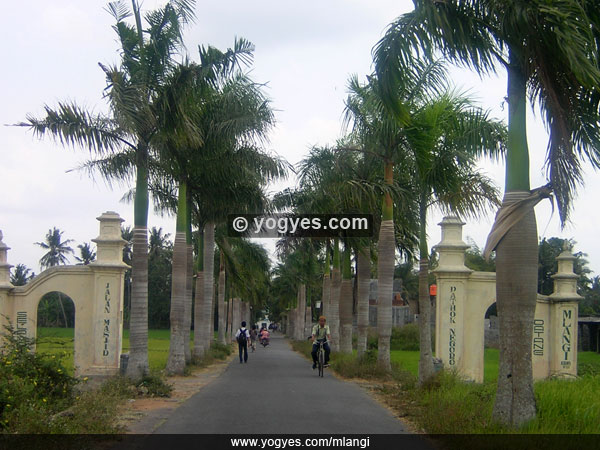
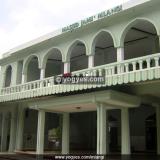
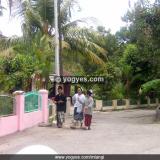
When you travel westwards through west ring road of Yogyakarta, you will pass paved street with coconut trees on both sides. The street will lead you to a village named Mlangi, particularly to a mosque named Jami' Mlangi. The surroundings of the mosque is a cemetery with the most popular one is of Kyai Nur Iman's tomb.
The name Mlangi is inseparable from Kyai Nur Iman figure who is actually the relative of Hamengku Buwono I, whose original name was Pangeran Hangabehi Sandiyo. The story tells that Nur Iman who built a pesanteren (School of Koran where the students live as boarders) was granted land by Hamengku Buwono I. The land was later named 'mlangi' from the Javanese word 'mulangi' that means to teach. It was named so because it was then used to teach Islam religion.
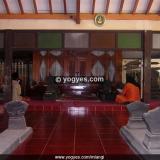
Jami' Mlangi is a legendary mosque in this village because it was built in 1760s during Kyai Nur Iman leadership. In spite of renovation and changes, its original architecture can still be seen. The mosque gate and the wall around the mosque, for example, were designed resembling the building in the Kingdom area. In this mosque that local people call as the 'Great Mosque', there is a white platform that Kyai Nur Iman used while teaching Islam.
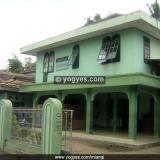
The tomb of Kyai Nur Iman lies close to the mosque. It is located in a building that looks like a house with wooden small buildings around it. Each year, especially on 15 Syura of the Javanese calendar when Kyai Nur Iman passed away and in Ruwah month of the Javanese calendar when Moslems are preparing fasting, many people come to visit the tomb. Only in Ramadhan time that less people visit the tomb. Usually, the pilgrims will read Koran beside of in front of the tomb house.
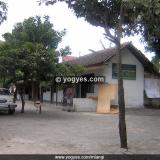
Walking around the village, you will find at least 10 pesantren. One of them lies at the south of As-Salafiyah mosque, to the east of Al-Huda, and to the north of Al-Falakiyah. As-Salafiyah is the oldest; it was built on 5 July 1921 by K.H. Masduki. In the beginning, As-Salafiyah was not a pesantren but community that learned religion in a small mosque. The community became a pesantren since more people were interested to join. Even though the building is not so big, there are 300 santri or boarders and it uses a teaching method that is not less developed than the one used in public shools.
The closeness of local people with Islam is just pure. You can justify it from their dresses. Men usually wear sarong, Moslem clothes, and peci (black hat of special design) even though they are not going to mosque. Almost all women in this village wear veil both inside and outside of the house. Implementing Islam teaching becomes the priority of Mlangi inhabitants. People are willingly sell their belongings to be able to go to Mecca for hajj.
Even though many people are engaged in learning Islam religion, it does not mean that they are not developed in secular affairs. Mlangi village is famous for its textile products. Only the product styles that change in time. In 1920s, weaving and casting batik business was famous until 1965s. This business declined when printed batik dominated market and the price of the materials increased. Only few of them survived; one of them was Batik Sultan Agung that also began to decline by the end of 1980s. The developing businesses in this village are batik trousers, peci, veil, badminton net and carambol board.
Every Ramadhan month, there are many activities done by the inhabitants. Some people from outside areas even come to take part in a quick teaching program. It is Ramadhan time now. It is the right time for you to visit the religious village where you can also see children fire fireworks on the days.
Text & Photo: Yunanto Wiji Utomo
Artistic: Sutrisno
Copyright © 2006 YogYES.COM
Resort hotel(s) near Mlangi Village
Tour operator(s) to Mlangi Village
Other Places of Interest in Yogyakarta